|
1
|
|
|
2
|
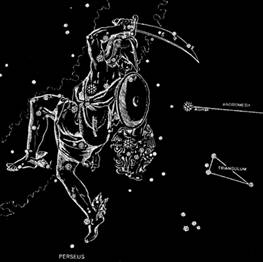
- Perseus was the son of Zeus and Danaë.
- When Perseus grew into a strong young man, Polydectes, the king of
Seriphus, fell in love with Danaë. Polydectes wanted to marry Danaë, but
did not want or like her son Perseus.
- Polydectes invited Perseus to a celebration and falsely announced his
plans to marry another. Each guest gave a gift to the king. Perseus, who
brought no gift, rashly promised to the king that he would give any gift
that the king wished.
- Polydectes couldn't believe his good fortune and asked for the head of
the Gorgon Medusa, knowing that the youth could never possibly return
home alive. Perseus readily agreed not realizing his task was seemingly
all but impossible.
|
|
3
|
- Perseus was successful in killing Medusa by using the reflection in his
shield.
- Upon return to Joppa, Perseus rescued Andromeda (daughter of the vain
Cassiopeia) from the monster Cetus.
- Perseus traveled back to Seriphus with his new wife Andromeda.
- Polydectes believed that Perseus would either return home empty-handed
or that he would die in the quest. Polydectes did not believe Perseus
had slain Medusa when Perseus arrived during a palace banquet.
- Perseus proved so by displaying the head of Medusa and everyone at the
banquet was turned to stone.
|
|
4
|
|
|
5
|
|
|
6
|
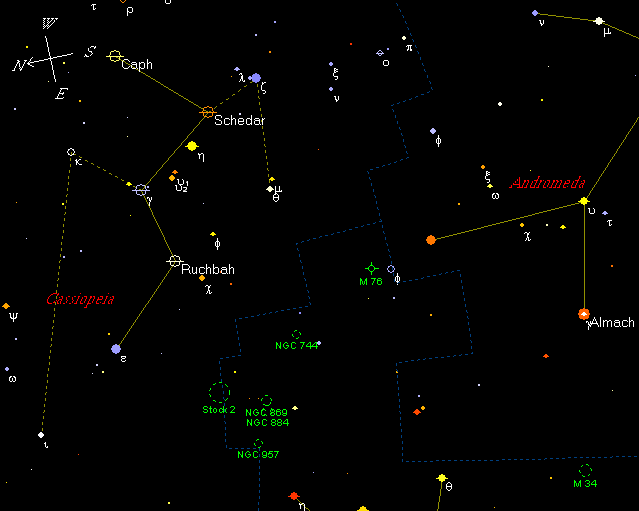
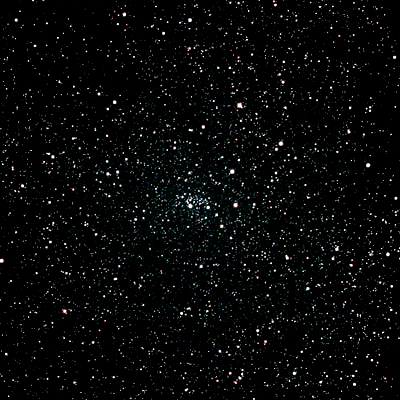
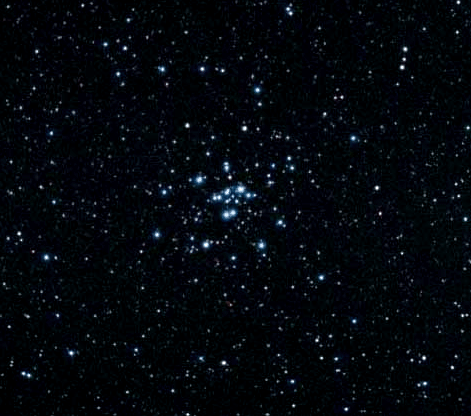
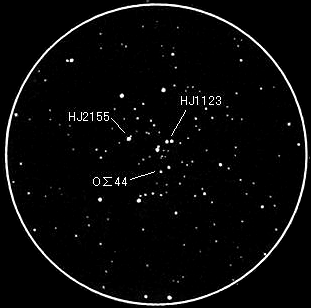
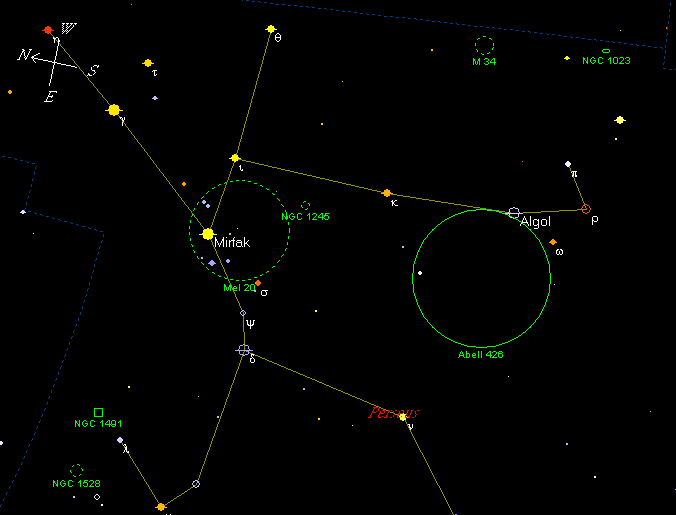
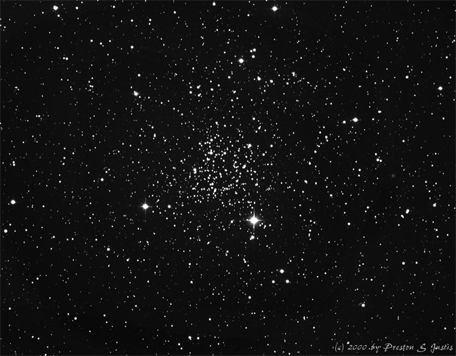
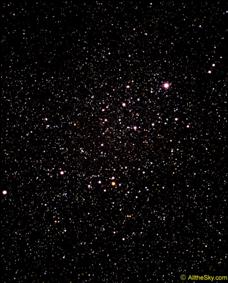
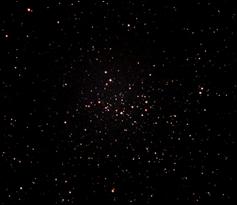
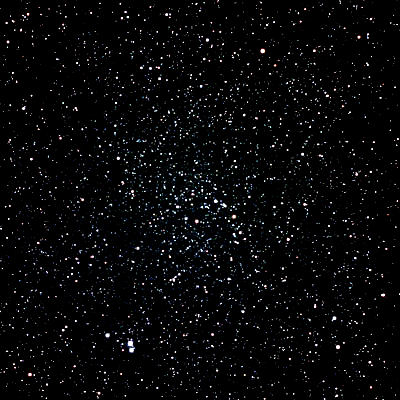
- Large cluster (~ 1 deg) located just to the north of the Double Cluster.
- Consists of 50+ stars with the brightest at 8.2 mag.
- Nice binocular or wide-field scope object.
- Well-studied object with a wealth of data available on the Internet.
|
|
7
|
- Located east of the Double Cluster.
- Size: 11.0'
Mag: 7.6
Brightest star: 9.5
Number of stars: 30
- Saguaro description: Cl,pL,pRi,*13...15
- The faint stars give the impression of “diamond dust” and begin to
resolve in larger scopes.
|
|
8
|
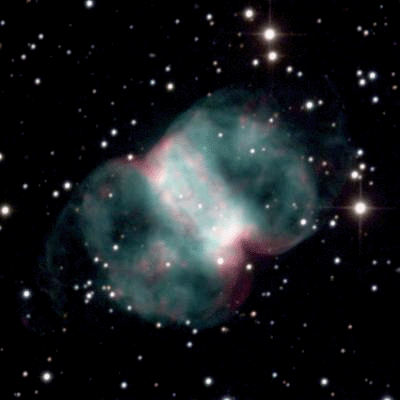
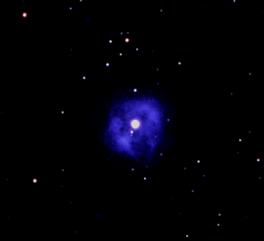
- Bright, central oblong shape reminds one of M27.
- Magnitude: 11.0
Size: 2.7' x 1.8'
- Central star: 17.6 mag
- Also known as the Cork Nebula.
- Easy target for 8-inch scopes.
|
|
9
|
- Magnitude: 5.2
Size: 35.0'
Number of stars: 100
Magnitude of brightest star: 7.3
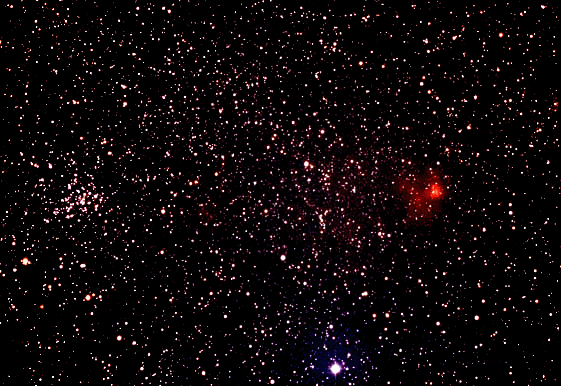
- Large cluster highlighted by bright blue stars against a rich area of
the Milky Way.
- Nice object in binoculars, wide-field scopes, and larger scopes at low
magnification.
|
|
10
|
|
|
11
|
- Brightest in a large area of galaxies known as the “NGC 1023 Group”.
- Magnitude: 10.5
Surface brightness: 11.4 mag/arcmin2
Size: 8.1' x 3.4'
Position angle: 87°
- Easy target in 8-inch scopes.
- Challenge: Observe the companion.
|
|
12
|
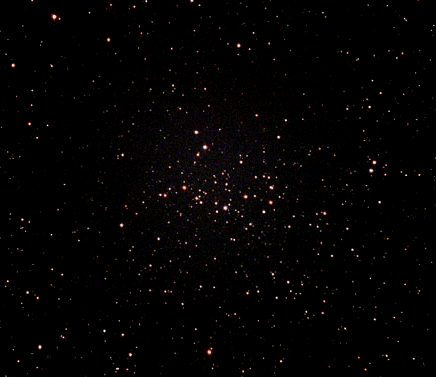
- Magnitude: 8.4
Size: 10.0'
Number of stars: 200
Magnitude of brightest star: 11.2
- Saguaro description: Cl,pL,Ri,C,iR,*12..15
- Compressed cluster but very rich with faint stars. Some compare it with
NGC 7789.
- Needs an 8-inch or larger scope for impact.
|
|
13
|
- Magnitude: 1.2
Size: ~ 3 degrees
Number of stars: 50
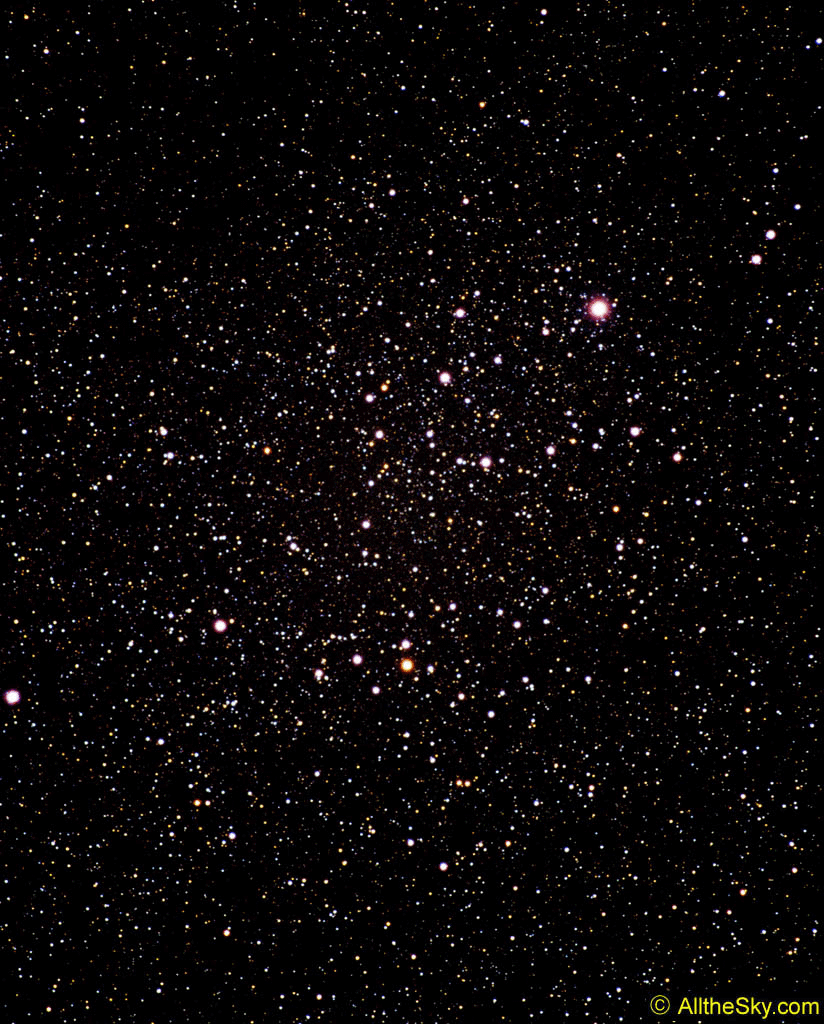
- Wonderful binocular object with a curving arc of bright stars around
alpha Per (Mirfak).
- The distance of this cluster has recently been measured by the Hipparcos
satellite as 601 light years.
|
|
14
|
- Magnitude: 6.4
Size: 24.0'
Number of stars: 40
Magnitude of brightest star: 8.8
- Saguaro description: Cl,B,vRi,cC
- Some see “arcs of stars” within the cluster in larger scopes. I see a
lower-case “m”.
|
|
15
|
- Magnitude: 6.7
Size: 14.0'
Number of stars: 40
Magnitude of brightest star: 8.8
- Large and easy to identify.
|
|
16
|
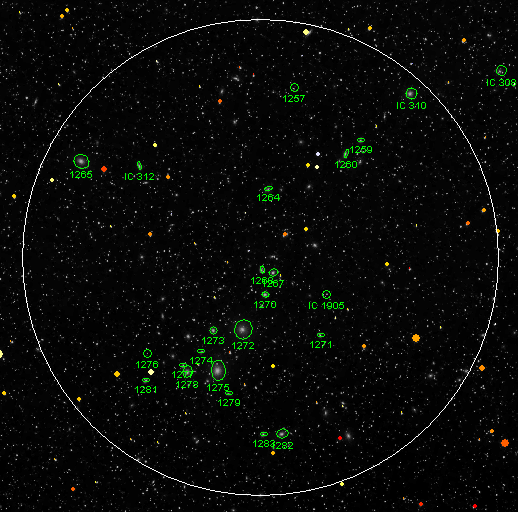
- Very large and dense galaxy cluster.
- Reported to be excellent in 12-inch and larger scopes under dark skies.
Use an exit pupil of about 1.5mm to detect faintest members.
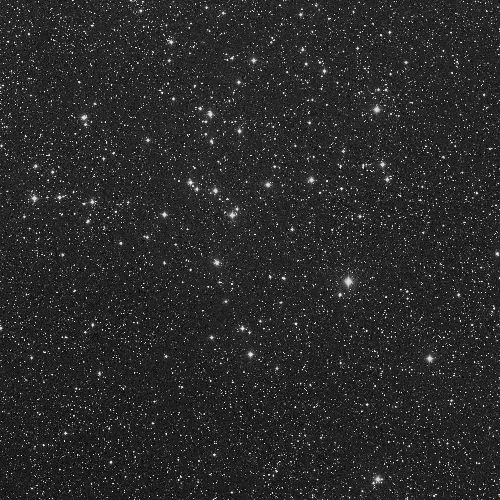
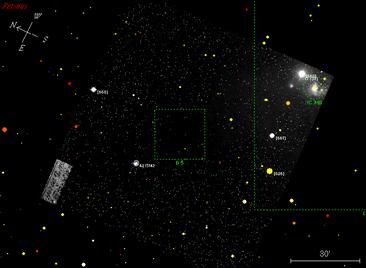
- View at right is about 0.5 degrees in diameter at the center of the
large cluster outline in chart.
- Great discussion of visually observing this cluster at: http://pw2.netcom.com/~ahighe/a426.html
|
|
17
|
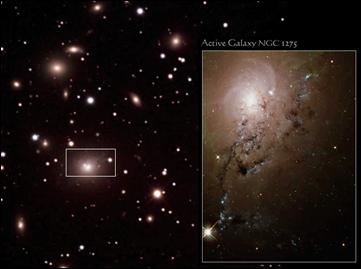
- Brightest in Abell 426 group and easiest to observe.
- Very active Seyfert galaxy is a strong radio (Perseus A) and X-ray
source (3C84).
- Research shows loops of gases moving outward at 1500 miles/s.
- ~235 million ly distant
- Foreground dust belongs to a nearly edge-on spiral colliding with the
brighter elliptical.
|
|
18
|
|
|
19
|
- Magnitude: 7.0
Size: 37.0'
Number of stars: 20
Magnitude of brightest star: 9.0
- Large cluster that appears best in binoculars and wide-field scopes.
|
|
20
|
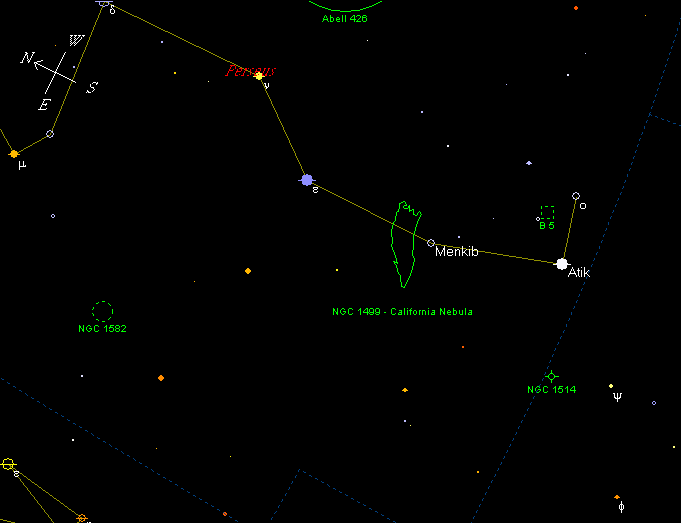
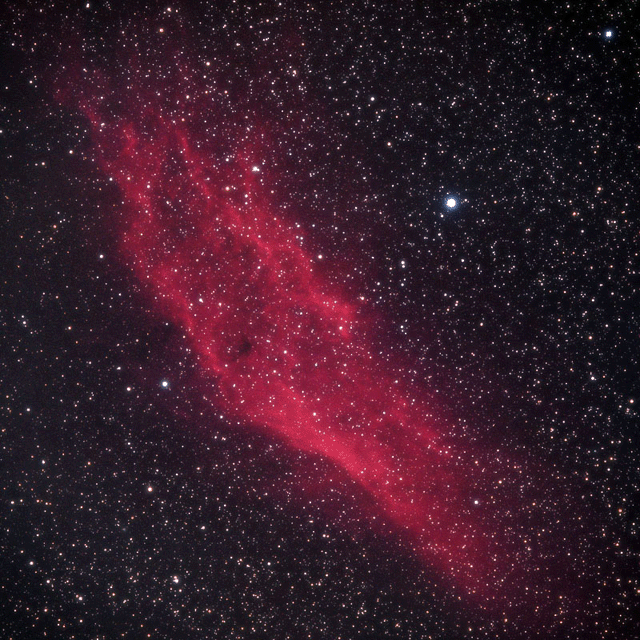
- Magnitude: 5.0
Size: 160.0' x 40.0'
- Low surface brightness.
- 1500 ly distance, 105 ly in extent.
- Object reported to respond well to an H-beta nebula filter. UHC shows
hints of the outline at a dark site.
- Best observed in a wide-field scope.
- In the Orion arm of the Milky Way and illuminated by Xi Per.
|
|
21
|
- Dark nebula 1 degree northeast of O Persei.
- Found on two separate lists of the “best of dark nebula”. Rated 5/6 for
ease of observation.
Link to List 1
Link to List 2
- Try observing with a wide-field scope or binoculars.
|
|
22
|
- Magnitude: 10.8
Size: 2.0' x 1.5'
- Central star: 9.5 mag
- Responds to OIII filter at about 100x.
- Real size is about 2.5 ly at a distance of 4300 ly.
|
|
23
|
|

 Notes
Notes